High-Precision Robotic Welding

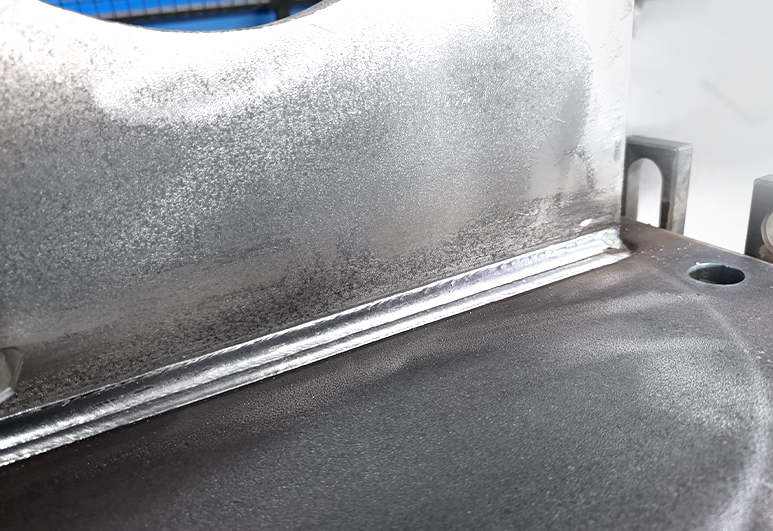
At Cometal, we use robotic welding systems to ensure high repeatability, full control of process parameters, and consistent quality across every manufactured component.

Process automation allows us to maintain high standards both for small batch production and high-volume manufacturing. The result is a precise, uniform, and reliable weld, ideal for structural components and complex assemblies.

Automated Processes for Repeatable, Controlled and Consistent-Quality Welding

Robotic welding is integrated into a complete manufacturing workflow that includes laser cutting, bending, combined operations, finishing, and assembly.

Our Technical Department supports each project to ensure components are ready for installation or further processing stages.

saldaturarobot-montmobile
TECHNOLOGY

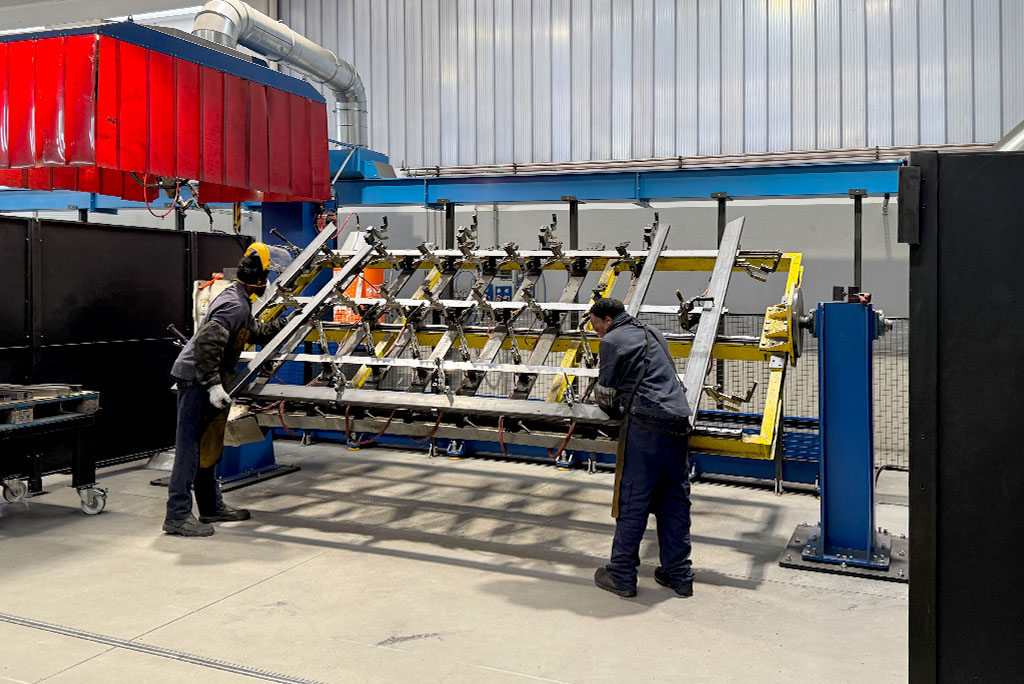
Mobile Column Welding Cell

A system designed for large-scale components, ideal for heavy structures and large-format parts.

Working capabilities:
  • 15-meter mobile column structure
  • 10,000 mm usable travel
  • 2 equipped stations with 4.25 m positioners
  • Workpiece rotation capability up to Ø 2.6 m
roboteco-girevole
TECHNOLOGY

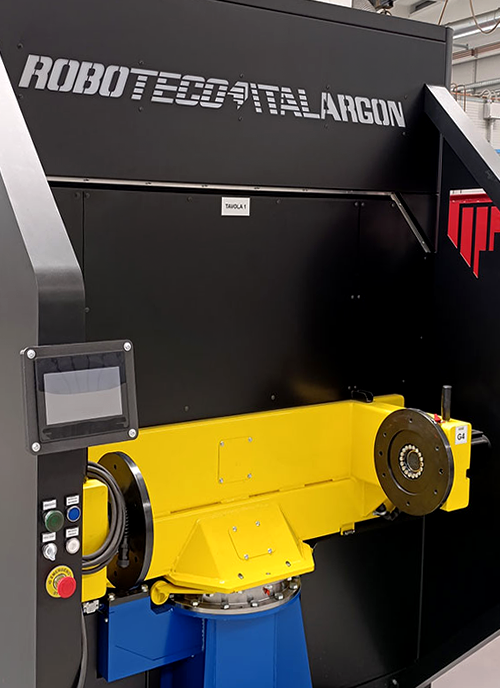
Rotary Table Welding Cell

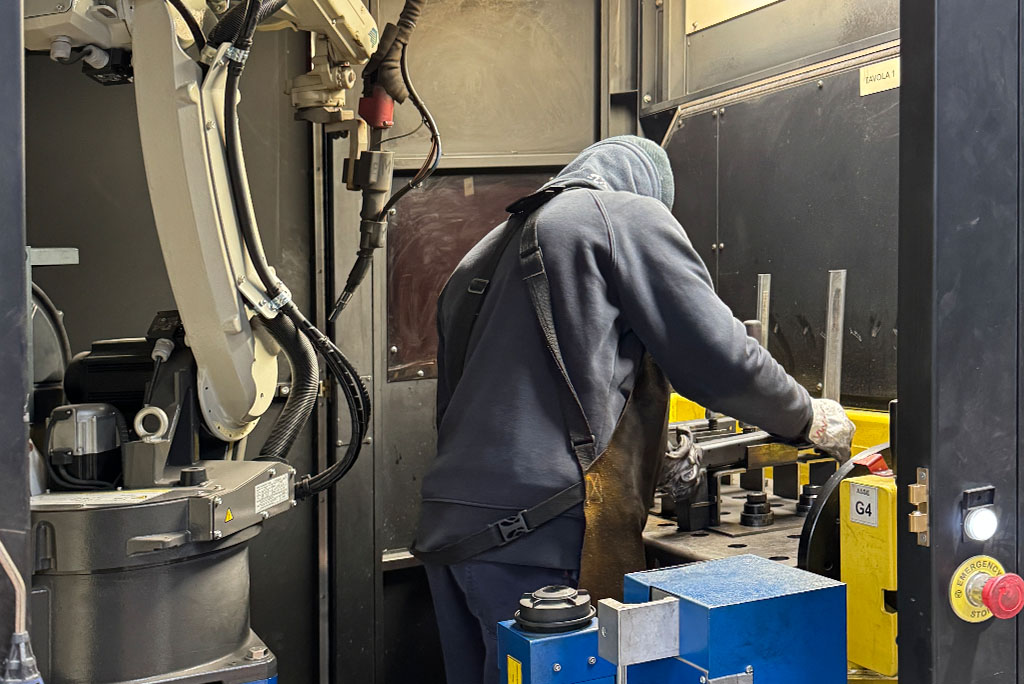
A compact, high-productivity robotic cell equipped with a dual-station configuration. This setup enables parallel loading and unloading operations during welding, significantly reducing idle time.

Working capabilities:
  • Rotary table system with two 1,000 × 600 mm positioners
  • Modular fixtures for fast changeovers
  • Production of repeatable small-to-medium batch components

When should robotic welding be used?

It is ideal for repetitive production or components requiring high precision and consistent quality, but it is also suitable for small batches thanks to modular fixtures.

Can you handle large components?

Yes. Our mobile column welding cell allows welding of large structures and components with significant dimensions and diameters.

Does robotic welding completely replace manual welding?

No. Both processes are used depending on the component. Robotic welding is ideal for standardizing quality and productivity, while manual welding is used for special or highly customized operations.