Combined Laser Cutting and Punching Operations

Combined manufacturing operations allow laser cutting, punching, tapping, and sheet metal forming to be performed within a single work centre.

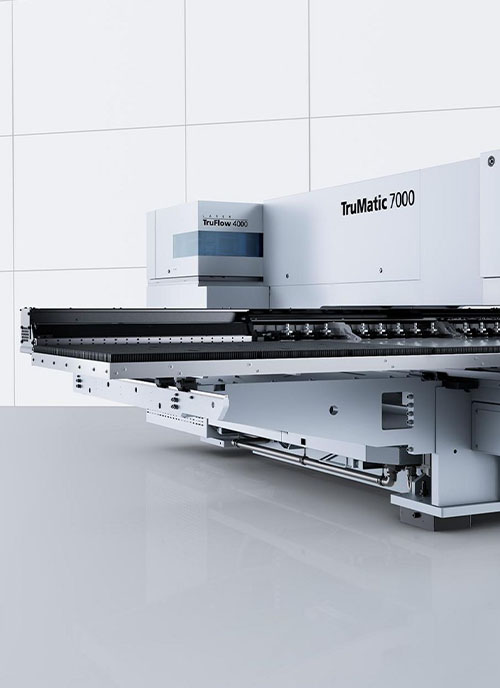
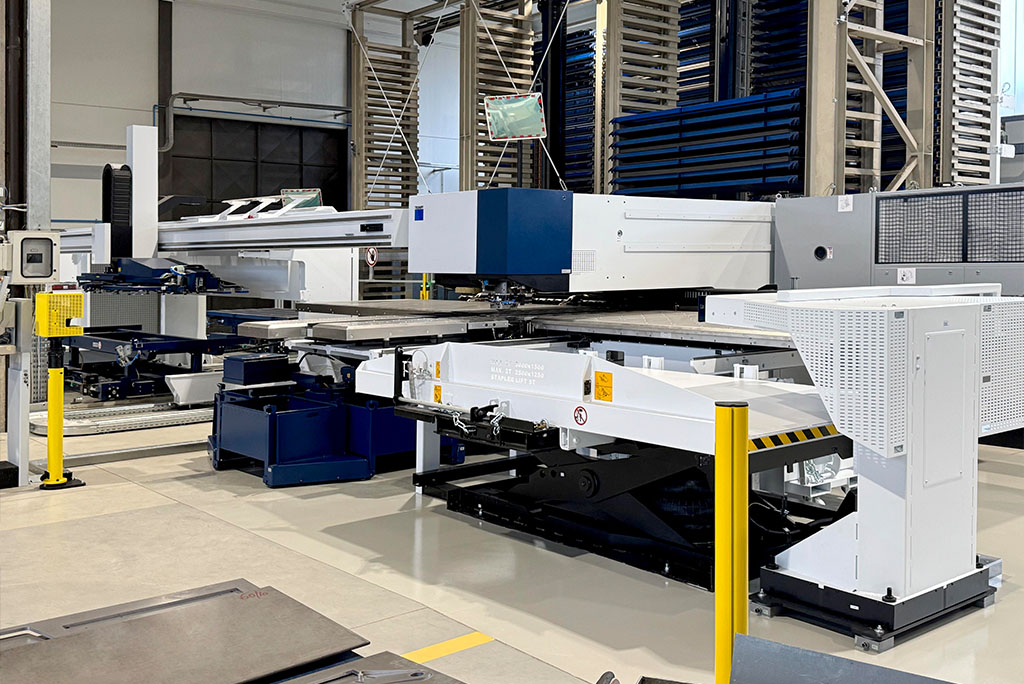
At Cometal, we use the TruMatic 7000 fiber, a high-end combined system that enables us to significantly reduce production times, increase precision, and optimize costs while ensuring high-quality finished components.

This process is ideal for complex parts requiring multiple operations, eliminating intermediate handling steps and ensuring maximum repeatability.

Laser Cutting, Punching and Forming in a Single Production Process for Maximum Efficiency

The TruMatic 7000 integrates fiber laser cutting, punching, and forming into a single highly productive and flexible solution.

Thanks to the Active Die technology, scratch-free parts can be produced while enabling forming operations directly within the machine, improving final component quality.

The automated sheet loading and unloading system, combined with additional laser axes, ensures high productivity levels even in small to medium batch production, while maintaining reduced cycle times.

The process is non-contact and features minimal heat input, preventing material distortion and ensuring clean, precise cut edges.

TruMatic7000-cometal
TECHNOLOGY

TruMatic 7000 Fiber

Combined processing is part of a complete production workflow that includes the Technical Department, bending, welding, finishing, and assembly. This enables us to provide a fully coordinated subcontract manufacturing service, from engineering to final production. We process steel, stainless steel, aluminium, copper, and brass in medium to thin thickness ranges, with high precision and repeatability, thanks to the latest-generation TruMatic 7000 Fiber.

Processable materials and dimensions:
  • Maximum sheet size 1500 × 3000 mm
  • Structural steel: up to 6 mm
  • Stainless steel: up to 6 mm
  • Aluminium: up to 6 mm
  • Copper: up to 3 mm
  • Copper: up to 3 mm

When is combined processing the right choice?

It is ideal when a component requires multiple operations (cutting, punching, threading, or forming), as all processes can be completed in a single setup, reducing lead times and costs.

What are the main advantages compared to conventional processes?

Higher precision, fewer production steps, protected surface quality, and shorter delivery times.